Let’s be honest—we usually talk about working with agencies or studios when something goes wrong. As in any industry, stories of mutual misunderstanding, missed deadlines, and ghosting are the most memorable. On the other hand, a well-managed process often seems so obvious and simple that there’s nothing to talk about. And yet, there is. Let’s break the topic down into its component parts. If only to see what constitutes a good model (in our understanding, of course) and to be aware of what is actually being ordered and in what form.
Simply put, working with a branding agency involves setting goals and scope, getting to know the brand, developing a strategic direction, designing, and preparing for implementation. The process depends on the company's situation: a new brand (or product) requires different work than organizing communication, and rebranding an organization that has been operating for a dozen years is different again. At every stage, knowledge, decisions, and commitment from both sides are needed. And yes, that also means availability and decision-making power on the client's side.
At LNV°ST, we combine brand strategy, communication, visual identity, and digital. This allows us to translate the established direction into materials that the company uses in sales, marketing, and daily contact with its audience. More on what strategic branding is here: https://www.lnv.st/en/magazine/branding-strategiczny----marka-zgodna-z-kierunkiem-firmy We determine the scope of this work at the beginning of our collaboration.
The first conversation: what needs to happen or change in the company?
Good news to start with—we don't expect a detailed brief from you. Instead, we invite you to a briefing session. It’s worth starting a conversation about branding with the business situation. Perhaps the company has expanded its offer, but its communication still describes its old activities. (More on that here:) Perhaps it is entering a new market, organizing several brands, or wants to reach different customers. It also happens that it primarily needs consistent materials and a clearer way of presenting its value.
At the first meeting, we determine the reason for the change, what materials already exist, who will participate in the project, and what the time and budget constraints are. You don't have to have a ready answer to every question. It is important that we know what decisions have already been made and what requires joint development. At this stage, we also need to know what budget you are allocating to the process and the timeline for its completion.
Based on this, we can propose a scope: from an audit and recommendations to a full rebranding process.
Research and strategy: the first decisions
Before designing, we collect and organize knowledge about the brand. We analyze its existing communication, offer, competitive environment, and available information about the audience. The more documents you provide, the better—but additionally (depending on the brand and goals), we will expand our search to see how the brand is perceived. Then, we invite you to a workshop. In the workshop team, we want to get to know the different perspectives of the people who will ultimately use the design system. More about the design system here: https://www.lnv.st/en/magazine/design-system-co-to-jest-i-po-co-to-komu It is very important for us to work directly with the client's team and tailor the material to their needs.
The scope of research depends on what we need to find out. Analyzing existing materials and talking to the team does not replace customer research if key decisions require understanding their behavior or motivations. In such a situation, we set an additional research scope.
The result of the strategic work is a set of assumptions that we can refer to during the design process: who the brand is for, what it promises, how it justifies its value, and how it wants to be perceived. Depending on the assignment, we also organize the brand architecture, key messages, and tone of voice. (You can read more about strategy here: https://www.lnv.st/en/services/strategia-marki )
Creation: translating assumptions into a brand system
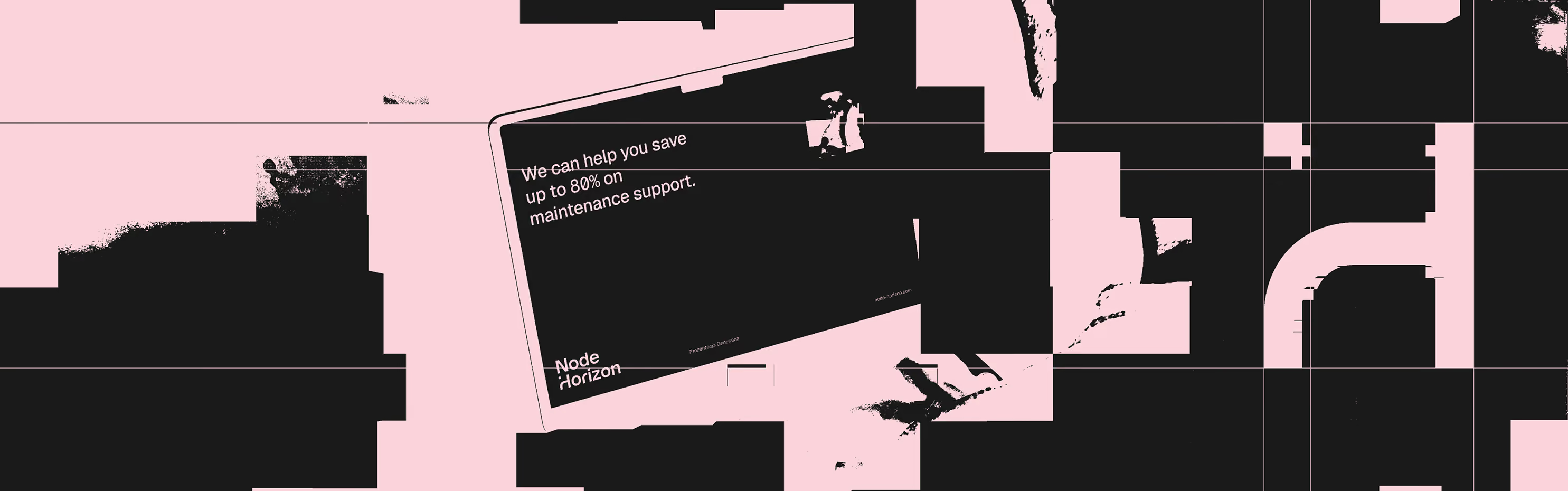
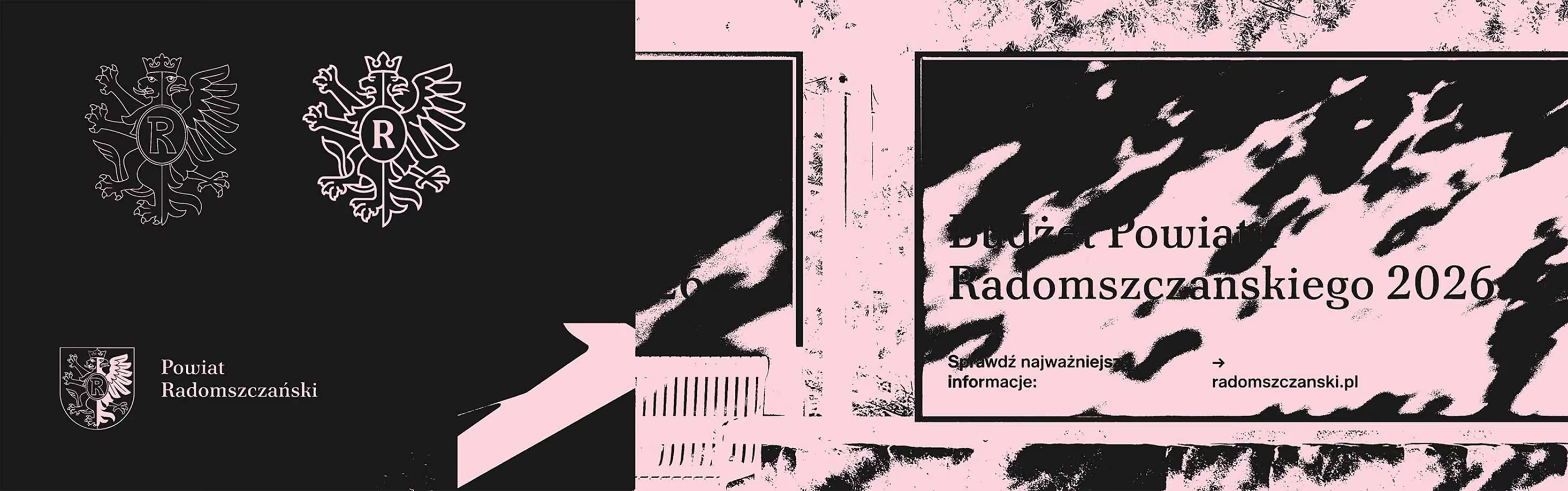
We already know what we want to say, to whom, and at which touchpoints. And that is the starting point that is binding for us. At the creation stage, we develop visual and linguistic solutions. The development should show how the proposed direction responds to the project's goals and how it behaves in applications relevant to the company. In other words, we know what we want to achieve. If the brand sells mainly through conversations and offers, an important test of the system will be a sales presentation. If it operates in digital, we need to see how it works on screen. We select applications based on the brand's actual communication.
The question arises—where does the act of creation and aesthetics fit into all this? How do we agree on issues related to preferences and taste? Once we confirm the most important strategic and logistical issues, we usually have a meeting regarding visual directions before developing the full new creative work. We prepare moodboards. A moodboard shows the style based on other existing projects. At LNV°ST, we work with concrete moodboards that show visual solutions, not just associations (i.e., these are the illustrative directions we propose for this project, rather than: these photos of nature will evoke similar emotions in us as our target projects). Each moodboard direction responds to a strategic task—so we don't look at things that are irrelevant to the project at hand. However, it allows us to identify, without emotion, what aesthetics the client prefers. We guarantee that the project will meet the strategic assumptions and we ensure that the design is functional. We propose solutions. But we also learn your preferences. The creative work that follows the moodboard is the result of needs, preferences, and our creativity. We aim precisely, developing material that will be both attractive and functional.
Once a direction is chosen, we develop the solution and refine its elements. The number of proposals, feedback rounds, and deliverables is defined in the proposal.
The developed visual direction is then translated into a full design system. Read more about design systems here: https://www.lnv.st/en/magazine/design-system-co-to-jest-i-po-co-to-komu
How do we divide responsibilities?
Feedback and approvals: how to maintain workflow continuity?
At the start, we determine who will collect feedback and who will make the final decisions. After each presentation, we require a single, consolidated set of feedback. This allows us to address the company's position and plan our next steps accordingly.
Approval of a stage allows us to move on to the next. If goals or a previously approved direction change later on, we work together to determine the impact of those changes on the scope, budget, and timeline.
Implementation: putting the brand to work
Finally, we prepare the agreed-upon documentation, files, and templates. Depending on the project, this may also include the website, sales materials, and team training. The company should know where current assets are located, how to use them, and who is responsible for maintaining the system. Read more about documentation (for those truly interested in the difference between a logobook and a brandbook :)) https://www.lnv.st/magazine/logobook-brandbook-siw-i-brand-guidelines )
.avif)